I’m learningMandarinJapaneseSpanishFrench
Get the appTry FlashfriendGet appTry now

Your first 100 words in just two weeks.

On average, Flashfriend learners get there in just 15 minutes a day, with flashcards built on the memory techniques that make learning easy.

No sign-up to start. Then 7 days free, cancel any time.

At the shopping centre · shū sounds like “shoe”“A book tucked inside a shoe”
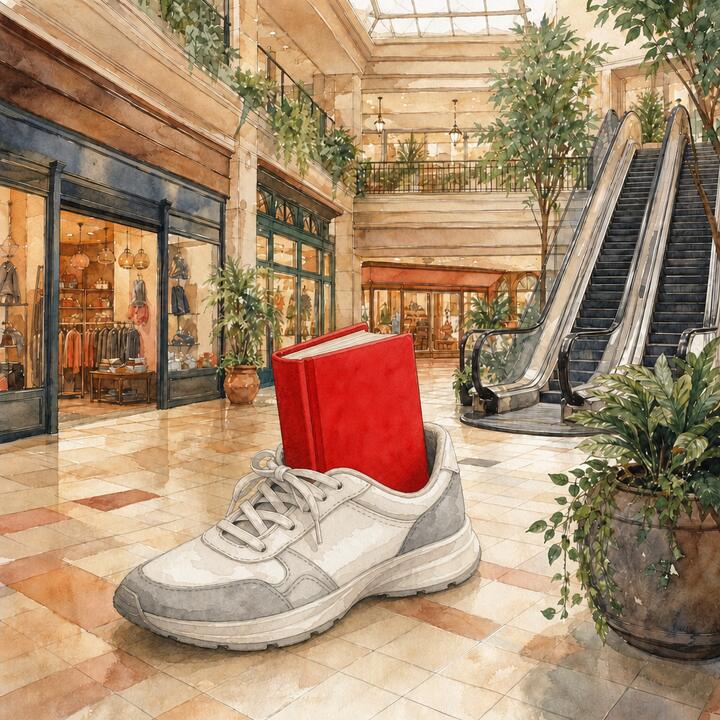
Watercolour: a red hardback book stuffed into a giant white trainer in the middle of a shopping centre
书shū · bookshū sounds like “shoe”. A book tucked inside a shoe, at the shopping centre.
  1. A place you know for every word starting sh-: the shopping centre
  2. Sounds like the word: shū, “shoe”
  3. Tone colour: first tone, so the book is red

At the newsagent · neko sounds like “neck-o”“A cat stretching its very long neck”
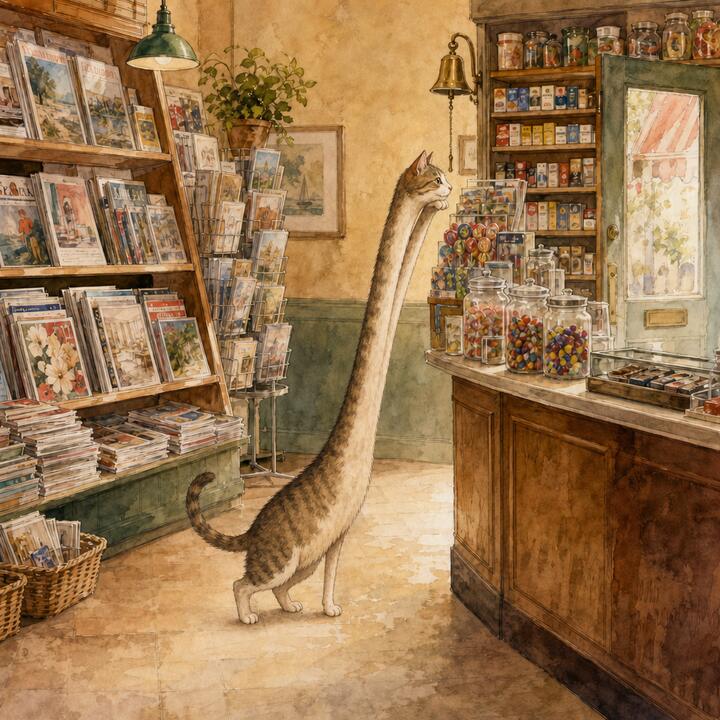
Watercolour: a tabby cat stretching an impossibly long neck up past the sweet jars in a corner newsagent
猫ねこcatneko sounds like “neck-o”. A cat stretching its very long neck, at the newsagent.
  1. A place you know for every な-row word: the newsagent
  2. Sounds like the word: neko, “neck-o”
  3. Furigana show how the kanji is read

At the market · mesa sounds like “messy”“A dog makes a mess of the table”
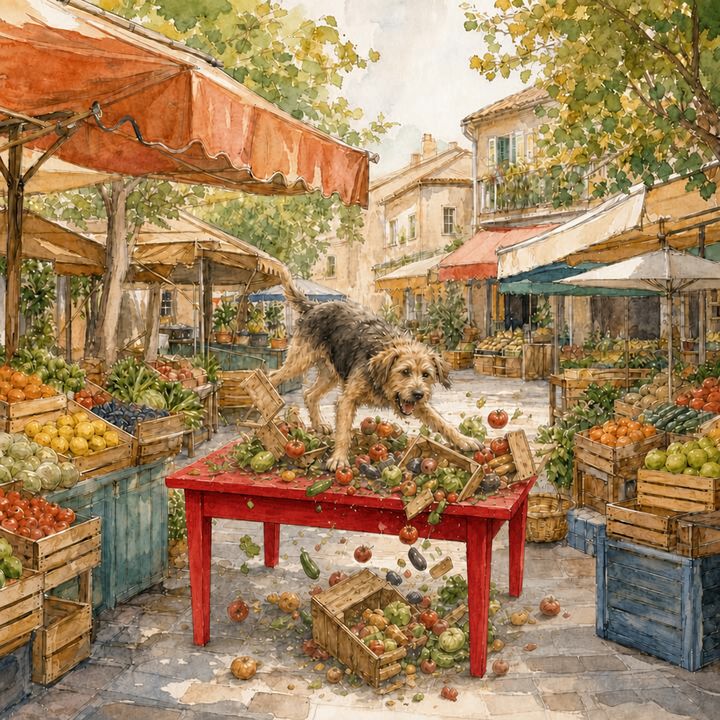
Watercolour: a scruffy dog on a bright red market table, sending fruit and vegetables flying
la mesatablemesa sounds like “messy”. A dog makes a mess of the table, at the market.
  1. A place you know for every word starting m-: the market
  2. Sounds like the word: mesa, “messy”
  3. Gender colour: a la word, so the table is red

At the pub · porte sounds like “port”“A door with a ship’s anchor on it”
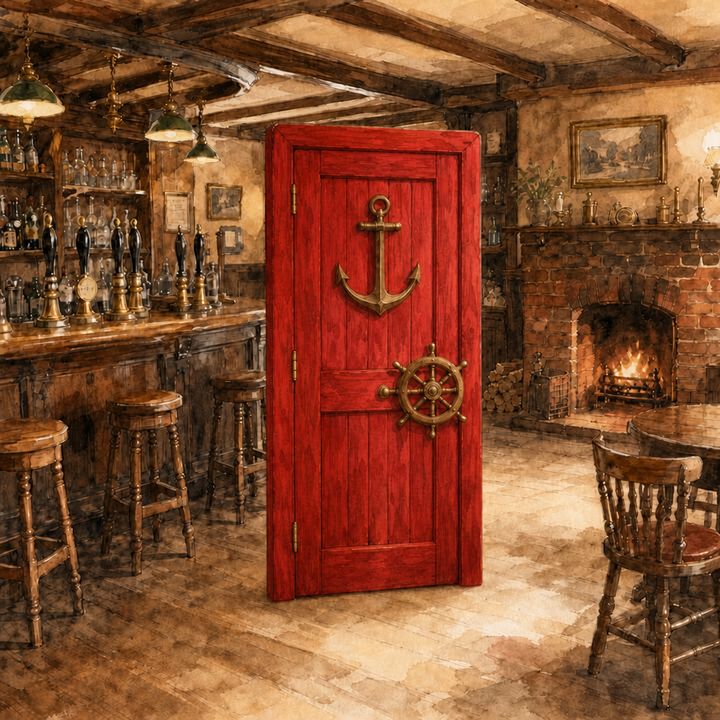
Watercolour: a bright red door with a ship’s anchor and wheel on it, standing in a cosy old pub
la portedoorporte sounds like “port”. A door with a ship’s anchor on it, at the pub.
  1. A place you know for every word starting p-: the pub
  2. Sounds like the word: porte, “port”
  3. Gender colour: a la word, so the door is red
30 seconds

See a card made, reviewed and practised

Recorded in the app. Every picture was painted by Flashfriend, the same way it paints yours.

How it works

Try it yourself!

Make a card in a few taps. Pick a place and a scene, see what Flashfriend adds, then put yourself in it.

Language for this exampleMandarinJapaneseSpanishFrench
Your word书shū“book”
Your place
Your scene

Pick your place for sh-

Every word that starts with sh happens in one place you know. In the app, you pick it once.

Any place you know

Pick a scene

shū sounds like “shoe”. Pick the scene you like best. In the app, you can also write your own.

Write your own scene

Add the tone colour

shū is the first tone, and the first tone is red. Flashfriend does this part for you.

Put yourself in it

We remember what happens to us far better than what happens to anyone else. Pick a look, and the scene happens to them.

Take a selfie

That’s your card.

A place for the sound, a scene you picked, the colour on top, and you in the middle of it. In the app, the places are ones you know, the scenes can be anything you can picture, and you take one selfie. Flashfriend suggests a few scenes to get you going.

The shed, empty
书shū· bookshū sounds like “shoe”. First tone, so the book is red.
Your word猫ねこ“cat”
Your place
Your scene

Pick your place for n-

Every word in the な row (na, ni, nu, ne, no) happens in one place you know. In the app, you pick it once.

Any place you know

Pick a scene

neko sounds like “neck-o”. Pick the scene you like best. In the app, you can also write your own.

Write your own scene

Nothing to colour

Japanese has no tones or genders, so your card is ready as it is.

Put yourself in it

We remember what happens to us far better than what happens to anyone else. Pick a look, and the scene happens to them.

Take a selfie

That’s your card.

A place for the sound, a scene you picked, and you in the middle of it. In the app, the places are ones you know, the scenes can be anything you can picture, and you take one selfie. Flashfriend suggests a few scenes to get you going.
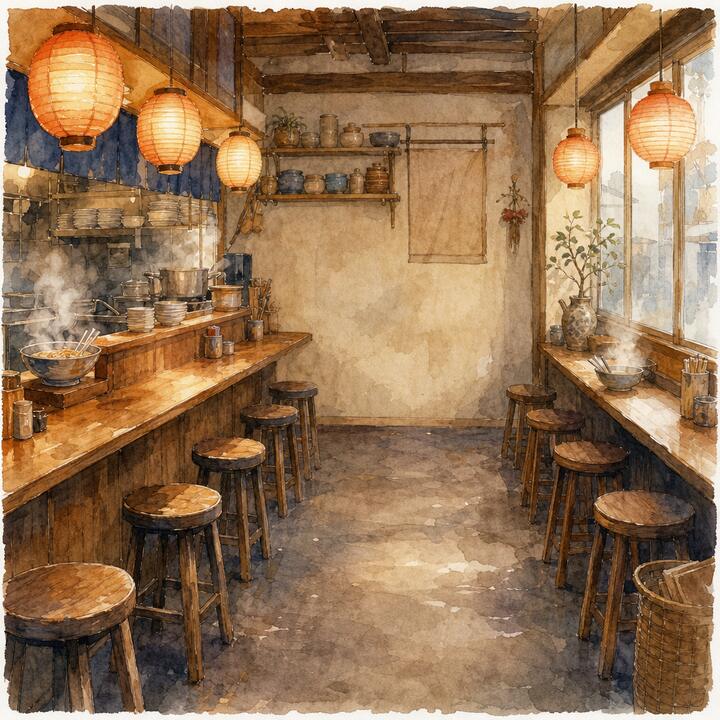
The noodle bar, empty
猫ねこ· catneko sounds like “neck-o”.
Your wordla mesa“table”
Your place
Your scene

Pick your place for m-

Every word that starts with m happens in one place you know. In the app, you pick it once.

Any place you know

Pick a scene

mesa sounds like “messy”. Pick the scene you like best. In the app, you can also write your own.

Write your own scene

Add the gender colour

Mesa is a la word, and la words are red. Flashfriend does this part for you.

Put yourself in it

We remember what happens to us far better than what happens to anyone else. Pick a look, and the scene happens to them.

Take a selfie

That’s your card.

A place for the sound, a scene you picked, the colour on top, and you in the middle of it. In the app, the places are ones you know, the scenes can be anything you can picture, and you take one selfie. Flashfriend suggests a few scenes to get you going.
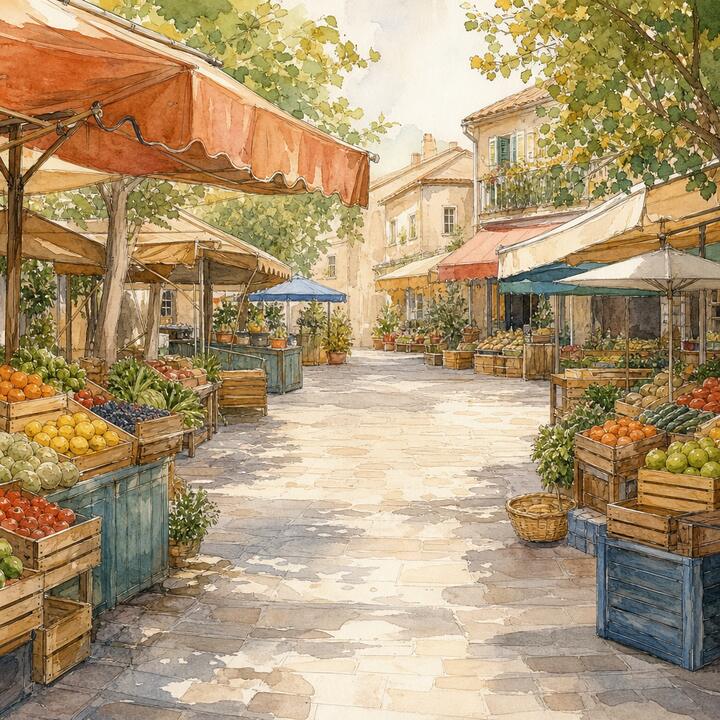
The market, empty
la mesa· tablemesa sounds like “messy”. A la word, so the table is red.
Your wordla porte“door”
Your place
Your scene

Pick your place for p-

Every word that starts with p happens in one place you know. In the app, you pick it once.

Any place you know

Pick a scene

porte sounds like “port”. Pick the scene you like best. In the app, you can also write your own.

Write your own scene

Add the gender colour

Porte is a la word, and la words are red. Flashfriend does this part for you.

Put yourself in it

We remember what happens to us far better than what happens to anyone else. Pick a look, and the scene happens to them.

Take a selfie

That’s your card.

A place for the sound, a scene you picked, the colour on top, and you in the middle of it. In the app, the places are ones you know, the scenes can be anything you can picture, and you take one selfie. Flashfriend suggests a few scenes to get you going.

The park, empty
la porte· doorporte sounds like “port”. A la word, so the door is red.
What you learn next

Always the most useful word next.

Flashfriend teaches you the most frequently used words in the language you’re learning, in the best order to learn them. Each word gets a card that suits it.

Next on the word list:
  1. 1书book(Picture card)
  2. 2猫cat(Picture card)
  3. 3突然suddenly(Sentence card)
  4. 4了done, changed(Grammar)
  5. 5米饭rice(Picture card)
Next on the word list:
  1. 1猫ねこcat(Picture card)
  2. 2本ほんbook(Picture card)
  3. 3突然とつぜんsuddenly(Sentence card)
  4. 4がsubject marker(Grammar)
  5. 5ご飯はんrice(Picture card)
Next on the word list:
  1. 1la mesatable(Picture card)
  2. 2el gatocat(Picture card)
  3. 3de repentesuddenly(Sentence card)
  4. 4delof the(Grammar)
  5. 5el arrozrice(Picture card)
Next on the word list:
  1. 1la portedoor(Picture card)
  2. 2le chatcat(Picture card)
  3. 3soudainsuddenly(Sentence card)
  4. 4dusome, of the(Grammar)
  5. 5le rizrice(Picture card)
Picture card

Simple words get a picture card

Things you can see or do, like book and cat. The picture is made from your place and a scene, the way you just tried.

Watercolour: a red hardback book stuffed into a giant white trainer in the middle of a shopping centre书shū· bookshū sounds like “shoe”.
Two cards for each word
  • See the word, picture what it means
  • See the picture, say the word yourself
Sentence card

Harder words and grammar get a sentence card

Sentence cards use words you already know, plus exactly one new one. So you learn words and grammar intuitively.
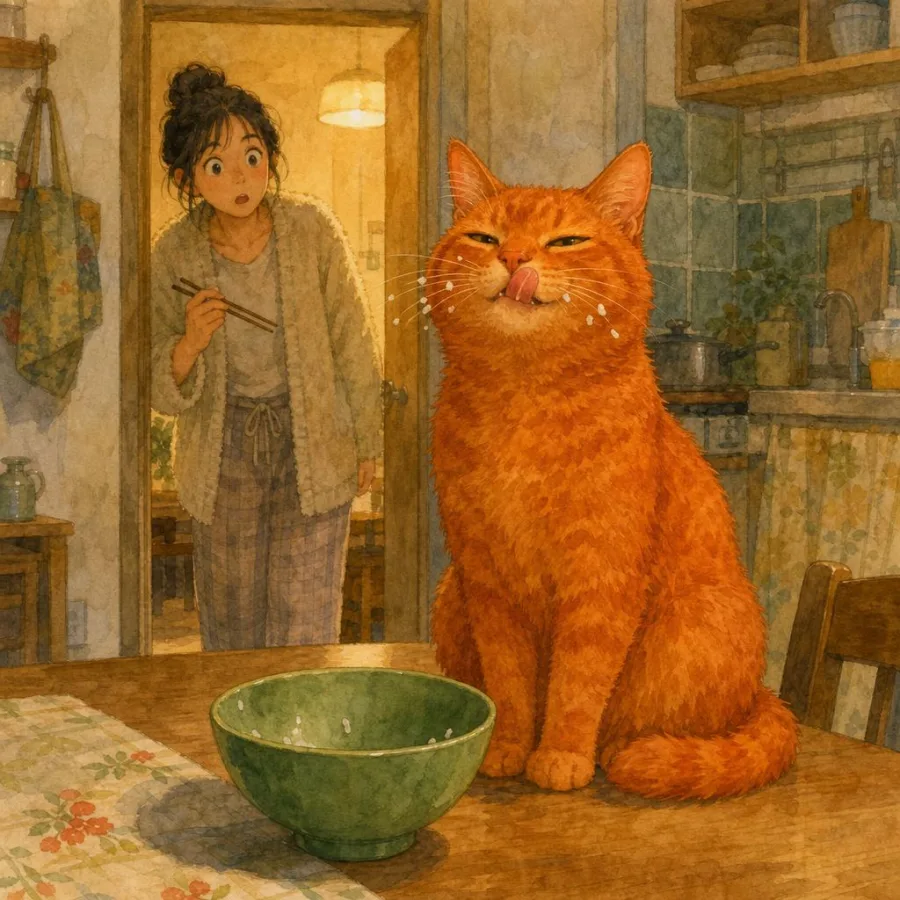
Watercolour: a smug orange-red cat licks its lips beside an empty green rice bowl as its owner stares from the doorway holding chopsticks
  1. 猫māo✓ known
  2. 突然tūrán+1 new
  3. 吃chī✓ known
  4. 了le✓ known
  5. 米饭mǐfàn✓ known

The cat suddenly ate the rice.

Two cards for each sentence
  • Fill the gap, with the picture as a hint
  • Use the word in a sentence of your own
Picture card

Simple words get a picture card

Things you can see or do, like cat and book. The picture is made from your place and a scene, the way you just tried.

Watercolour: a tabby cat stretching an impossibly long neck up past the sweet jars in a corner newsagent猫ねこ· catneko sounds like “neck-o”.
Two cards for each word
  • See the word, picture what it means
  • See the picture, say the word yourself
Sentence card

Harder words and grammar get a sentence card

Sentence cards use words you already know, plus exactly one new one. So you learn words and grammar intuitively.

Watercolour: a smug orange-red cat licks its lips beside an empty green rice bowl as its owner stares from the doorway holding chopsticks
  1. 猫ねこが✓ known
  2. 突然とつぜん+1 new
  3. ご飯はんを✓ known
  4. 食たべた✓ known

The cat suddenly ate the rice.

Two cards for each sentence
  • Fill the gap, with the picture as a hint
  • Use the word in a sentence of your own
Picture card

Simple words get a picture card

Things you can see or do, like table and cat. The picture is made from your place and a scene, the way you just tried.

Watercolour: a scruffy dog on a bright red market table, sending fruit and vegetables flyingla mesa· tablemesa sounds like “messy”.
Two cards for each word
  • See the word, picture what it means
  • See the picture, say the word yourself
Sentence card

Harder words and grammar get a sentence card

Sentence cards use words you already know, plus exactly one new one. So you learn words and grammar intuitively.

Watercolour: a smug orange-red cat licks its lips beside an empty green rice bowl as its owner stares from the doorway holding chopsticks
  1. El gato✓ known
  2. de repente+1 new
  3. comió✓ known
  4. el arroz✓ known

The cat suddenly ate the rice.

Two cards for each sentence
  • Fill the gap, with the picture as a hint
  • Use the word in a sentence of your own
Picture card

Simple words get a picture card

Things you can see or do, like door and cat. The picture is made from your place and a scene, the way you just tried.

Watercolour: a bright red door with a ship’s anchor and wheel on it, standing in a cosy old publa porte· doorporte sounds like “port”.
Two cards for each word
  • See the word, picture what it means
  • See the picture, say the word yourself
Sentence card

Harder words and grammar get a sentence card

Sentence cards use words you already know, plus exactly one new one. So you learn words and grammar intuitively.

Watercolour: a smug orange-red cat licks its lips beside an empty green rice bowl as its owner stares from the doorway holding chopsticks
  1. Le chat✓ known
  2. a✓ known
  3. soudain+1 new
  4. mangé✓ known
  5. le riz✓ known

The cat suddenly ate the rice.

Two cards for each sentence
  • Fill the gap, with the picture as a hint
  • Use the word in a sentence of your own

Sentences unlock once you know enough picture words, so every one is a sentence you can almost read.

Why it works

Three steps from your first word to whole sentences.

Each step uses memory techniques from research. Open one to see which, and why they work.

  1. A picture you’ll remember for every word

    Watercolour: a red hardback book stuffed into a giant white trainer in the middle of a shopping centre书shū · bookshū sounds like “shoe”.
    Watercolour: a tabby cat stretching an impossibly long neck up past the sweet jars in a corner newsagent猫ねこcatneko sounds like “neck-o”.
    Watercolour: a scruffy dog on a bright red market table, sending fruit and vegetables flyingla mesatablemesa sounds like “messy”.
    Watercolour: a bright red door with a ship’s anchor and wheel on it, standing in a cosy old publa portedoorporte sounds like “port”.

    Your own scene, with you in it, at a place you know.

    5 memory techniques
    • A picture for every word

      Your memory holds onto pictures far better than words, so every word gets a second way back. And a picture links the meaning straight to the new word, instead of routing it through your own language.

      Every word gets a picture.

      Research: Paivio, 1971 · Nelson et al., 1976 · Comesaña et al., 2009

    • A word means something different to everyone

      Things that mean something to you are the easiest to recall. So the picture starts from what the word means to you.

      You pick the scene, or make up your own, so the picture is yours.

      Research: Symons & Johnson, 1997 · Pruss et al., 2025 · Slamecka & Graf, 1978

    • You’re in the picture

      We remember what happens to us far better than what happens to anyone else. So when a scene has someone in it, it’s you: handing over the cash, hugging the fridge.


      A woman with curly red hair, round glasses and a green raincoatThe same woman, painted hugging a giant teapotYour selfie茶壶 · teapotティーポット · teapotla tetera · teapotla théière · teapot

      Take one selfie, and every scene stars you.

      Research: Grilli & Glisky, 2010 · Cunningham et al., 2008 · Wollen et al., 1972

    • Tones and genders, in colour

      The details that slip away first, like a word’s tone or gender, stick when you can see them. So the tone or gender becomes the colour of the thing you remember.

      In Mandarin, mǐ is green and fàn is blue, so the bowl is green and the fan is blue.

      Research: Godfroid et al., 2017 · Paivio, 1971

    • Readings, right on the word

      Kanji usually wall off new words until you’ve learned them. With the reading right there on the word, you can read every card from your first day, and every new word is yours from the start.

      Furigana over the kanji show how each word is read, so ご飯 is gohan from the first card.

      Research: Palmer, 2012

    • Tones and genders, in colour

      The details that slip away first, like a word’s tone or gender, stick when you can see them. So the tone or gender becomes the colour of the thing you remember.

      In Spanish, el words are blue and la words are red, so el arroz gets a blue rose.

      Research: Nyikos, 1988 · Paivio, 1971

    • Tones and genders, in colour

      The details that slip away first, like a word’s tone or gender, stick when you can see them. So the tone or gender becomes the colour of the thing you remember.

      In French, le words are blue and la words are red, so le riz gets a blue reel.

      Research: Nyikos, 1988 · Paivio, 1971

    • Same sound, same place

      Memory champions remember by placing things somewhere they know. Every word that starts with the same sound happens in one place you pick.

      Recall the place, and the word’s first sound comes back with it.

      Research: Maguire et al., 2003 · Dresler et al., 2017

  2. Back just before you forget

    MEMORYabout to forgetLearn1 day3 days1 week3 weeks

    Each card comes back right as you’re about to forget it, and the gap grows every time you remember.

    1 memory technique
  3. Sentences with one new word

    1. 猫
    2. 突然
    3. 吃
    4. 了
    5. 米饭
    The cat suddenly ate the rice. Every word known, plus one new.
    1. 猫ねこが
    2. 突然とつぜん
    3. ご飯はんを
    4. 食たべた
    The cat suddenly ate the rice. Every word known, plus one new.
    1. El gato
    2. de repente
    3. comió
    4. el arroz
    The cat suddenly ate the rice. Every word known, plus one new.
    1. Le chat
    2. a
    3. soudain
    4. mangé
    5. le riz
    The cat suddenly ate the rice. Every word known, plus one new.

    Once you know enough words, new ones come in sentences you can almost read, so the grammar sinks in too.

    1 memory technique
    • One new word at a time

      You learn most from sentences you can almost fully read. When you know nearly every word, you understand the whole sentence, so the one new word and the grammar around it both sink in.

      Sentence cards: words you know, plus exactly one new one.

      Research: Hu & Nation, 2000 · Laufer & Ravenhorst-Kalovski, 2010

The research behind these techniques
  1. Paivio, A. (1971). Imagery and Verbal Processes. Holt, Rinehart & Winston. archive.org/details/imageryverbalpro0000paiv
  2. Nelson, D. L., Reed, V. S., & Walling, J. R. (1976). Pictorial superiority effect. Journal of Experimental Psychology: Human Learning and Memory, 2(5), 523–528. doi.org/10.1037/0278-7393.2.5.523
  3. Comesaña, M., Perea, M., Piñeiro, A., & Fraga, I. (2009). Vocabulary teaching strategies and conceptual representations of words in L2 in children: Evidence with novice learners. Journal of Experimental Child Psychology, 104(1), 22–33. doi.org/10.1016/j.jecp.2008.10.004
  4. Symons, C. S., & Johnson, B. T. (1997). The self-reference effect in memory: A meta-analysis. Psychological Bulletin, 121(3), 371–394. doi.org/10.1037/0033-2909.121.3.371
  5. Pruss, Karni, & Prior (2025). Self-reference promotes vocabulary learning in a foreign language. Psychonomic Bulletin & Review. doi.org/10.3758/s13423-025-02674-w
  6. Slamecka, N. J., & Graf, P. (1978). The generation effect: Delineation of a phenomenon. Journal of Experimental Psychology: Human Learning and Memory, 4(6), 592–604. doi.org/10.1037/0278-7393.4.6.592
  7. Grilli, M. D., & Glisky, E. L. (2010). Self-imagining enhances recognition memory in memory-impaired individuals with neurological damage. Neuropsychology, 24(6), 698–710. doi.org/10.1037/a0020318
  8. Cunningham, S. J., Turk, D. J., Macdonald, L. M., & Macrae, C. N. (2008). Yours or mine? Ownership and memory. Consciousness and Cognition, 17(1), 312–318. doi.org/10.1016/j.concog.2007.04.003
  9. Wollen, K. A., Weber, A., & Lowry, D. H. (1972). Bizarreness versus interaction of mental images as determinants of learning. Cognitive Psychology, 3(3), 518–523. doi.org/10.1016/0010-0285(72)90020-5
  10. Maguire, E. A., Valentine, E. R., Wilding, J. M., & Kapur, N. (2003). Routes to remembering: the brains behind superior memory. Nature Neuroscience, 6(1), 90–95. doi.org/10.1038/nn988
  11. Dresler, M., Shirer, W. R., Konrad, B. N., Müller, N. C. J., Wagner, I. C., Fernández, G., Czisch, M., & Greicius, M. D. (2017). Mnemonic training reshapes brain networks to support superior memory. Neuron, 93(5), 1227–1235. doi.org/10.1016/j.neuron.2017.02.003
  12. Hu, M., & Nation, I. S. P. (2000). Unknown vocabulary density and reading comprehension. Reading in a Foreign Language, 13(1), 403–430. doi.org/10.64152/10125/66973
  13. Laufer, B., & Ravenhorst-Kalovski, G. C. (2010). Lexical threshold revisited: Lexical text coverage, learners’ vocabulary size and reading comprehension. Reading in a Foreign Language, 22(1), 15–30. doi.org/10.64152/10125/66648
  14. Godfroid, A., Lin, C.-H., & Ryu, C. (2017). Hearing and seeing tone through color: An efficacy study of web-based, multimodal Chinese tone perception training. Language Learning, 67(4), 819–857. doi.org/10.1111/lang.12246
  15. Nyikos, M. (1988). The effect of color and imagery as mnemonic strategies on learning and retention of lexical items in German (Doctoral dissertation). Purdue University. docs.lib.purdue.edu/dissertations/AAI8814499
  16. Palmer, J. A. (2012). The effect of furigana on lexical inferencing of unknown kanji words (Master’s thesis). Brigham Young University. scholarsarchive.byu.edu/etd/3235
  17. Murre, J. M. J., & Dros, J. (2015). Replication and analysis of Ebbinghaus’ forgetting curve. PLOS ONE, 10(7), e0120644. doi.org/10.1371/journal.pone.0120644
  18. Cepeda, N. J., Pashler, H., Vul, E., Wixted, J. T., & Rohrer, D. (2006). Distributed practice in verbal recall tasks: A review and quantitative synthesis. Psychological Bulletin, 132(3), 354–380. doi.org/10.1037/0033-2909.132.3.354
  19. Roediger, H. L., & Karpicke, J. D. (2006). Test-enhanced learning: Taking memory tests improves long-term retention. Psychological Science, 17(3), 249–255. doi.org/10.1111/j.1467-9280.2006.01693.x
Stats

Watch your vocabulary grow.

See the words you know well and every day you studied. In the app, detailed graphs and stats show how all your learning is going.

Coming from Anki? Bring everything.

  • Your cards and every review come with you, so nothing starts over.
  • Importing is free. Your first 10 pictures are too, and a plan makes one for every word after that.
  • Export back to Anki any time, pictures and audio included.
Pro

Practise the words you know, and save new ones while you read and watch.

Save words while you read and watch

Add a word in one tap from a browser add-on or video player, like Yomitan or asbplayer. It lands in your Inbox, ready to become a card.

Yomitan guideasbplayer guide

Practise with Claude or ChatGPT

Chat or talk out loud, using only the words you know. Ask it to save a new word and it goes to your Inbox.

Connect your AI tool

Feedback on what you say Coming soon

Say a sentence out loud while you review, and hear how to fix it.

$9.99 a month. $12.99 with Pro.£7.99 a month. £9.99 with Pro.

7 days free on any plan. Pay yearly for about half the price, or monthly. Reviewing your cards is always free.

Regular

Everything for learning with flashcards.

$49.99a year

That's $4.17 a month, billed yearly

$9.99a month

Billed monthly

£39.99a year

That's £3.33 a month, billed yearly

£7.99a month

Billed monthly

  • A picture, memory hook, tone or gender colours and voice for every word
  • Up to 400 pictures a month: about 20 new cards a day
  • Thousands of the language’s most useful words, in the order to learn them
  • Learn sentences and grammar
  • Stats on your progress
  • Your cards stored in the cloud, so you can use them on any device
Get the appTry Flashfriend

Pro

Everything in Regular, plus:

$74.99a year

That's $6.25 a month, billed yearly

$12.99a month

Billed monthly

£59.99a year

That's £5 a month, billed yearly

£9.99a month

Billed monthly

  • No monthly limit on pictures
  • Practise with Claude or ChatGPT, by text or voice, using only the words you know
  • Save words while you read and watch, from browser add-ons and video players like Yomitan and asbplayer
  • Feedback on what you say Coming soon
Get the appTry Flashfriend
  • 7-day free trial of the whole plan
  • Cancel any time
  • Reviewing your deck is always free, and it's yours to export
  • Importing your Anki deck with its history is free
Learn

How to remember words.

Memory techniques, with the research behind them.

All articles
Guides

Step-by-step help for every setup.

Import from Anki, mine words from what you watch and read, connect your AI. A few minutes each.

All guides
FAQ

Good questions.

Do I need to know any of the language?

No. You start with simple words you can picture, and sentences come once you know enough.

Which languages can I learn?

Mandarin Chinese, Japanese, Spanish and French. Each has its own list of the most useful words, and you can learn more than one: switch between them in Settings.

Is there an iPhone or Android app?

Yes. Get it from the App Store on iPhone and from Google Play on Android. On a computer it runs in your browser. Your cards are stored in the cloud, so they follow you to every device.

How much does a plan cost?

Regular is $9.99 / £7.99 a month, or $49.99 / £39.99 a year. Pro is $12.99 / £9.99 a month, or $74.99 / £59.99 a year. Paying yearly costs about half as much as paying monthly. You can cancel any time.

What's in the free trial?

Pick a plan and everything in it is free for 7 days. You give your payment details when you start the trial, and you're charged when it ends unless you cancel first. Whatever you decide, you keep your deck and can review it for free.

Can I pay in the app?

Yes. You pay through the App Store on iPhone, through Google Play on Android, and by card on a computer. Your plan works on every device you sign in on.

Is there a limit on cards?

Regular makes up to 400 pictures a month, and Pro has no monthly limit. Reviewing your cards is unlimited on every plan.

What happens if I cancel?

Your deck stays yours. You can keep reviewing it in Flashfriend for free and export it to Anki any time. Making new cards needs a plan.

What's in Pro?

Mining from Yomitan, asbplayer and any tool that supports AnkiConnect, feedback on sentences you say out loud, and speaking with your words in your AI tool through MCP. Everything in Regular too.

How does Pro work with Claude or ChatGPT?

Connect Flashfriend to Claude or ChatGPT and it can see the words you know, so you can practise conversations at your level, by text or by voice. Ask it to save a new word and it goes to your Flashfriend Inbox.

Can I bring my Anki deck?

Yes, for free: all you need is an account. Your reviews come too, so nothing starts over, and words you already know are used to build your sentences. You don't have to stop using Anki: export your deck back whenever you like, and your pictures and audio go with it.

Make your first card in 30 seconds.

Start with no sign-up, on your phone or computer. Then 7 days free, and $9.99 a month or $49.99 a year£7.99 a month or £39.99 a year.

Free to start
No sign-up
Get the appTry FlashfriendGet it on Google Play